
BESS for Businesses: When Battery Storage Makes Sense
BESS for businesses is more than backup power—peak shaving, PV integration, EMS/SCADA, operational stability and site security in one system
In this article
Key takeaways
- ✓ A practical example of a real-world solution
- ✓ Connected to a specific service or technology
- ✓ Relevant for companies, construction sites, industrial premises and public buildings
BESS is no longer just “a battery next to PV.” In businesses, municipalities and technical facilities, battery energy storage makes sense wherever there is a need to reduce peak demand, stabilise operation, improve self-consumption of on-site energy, provide backup for selected circuits, or prepare a site for flexibility and future electrification.
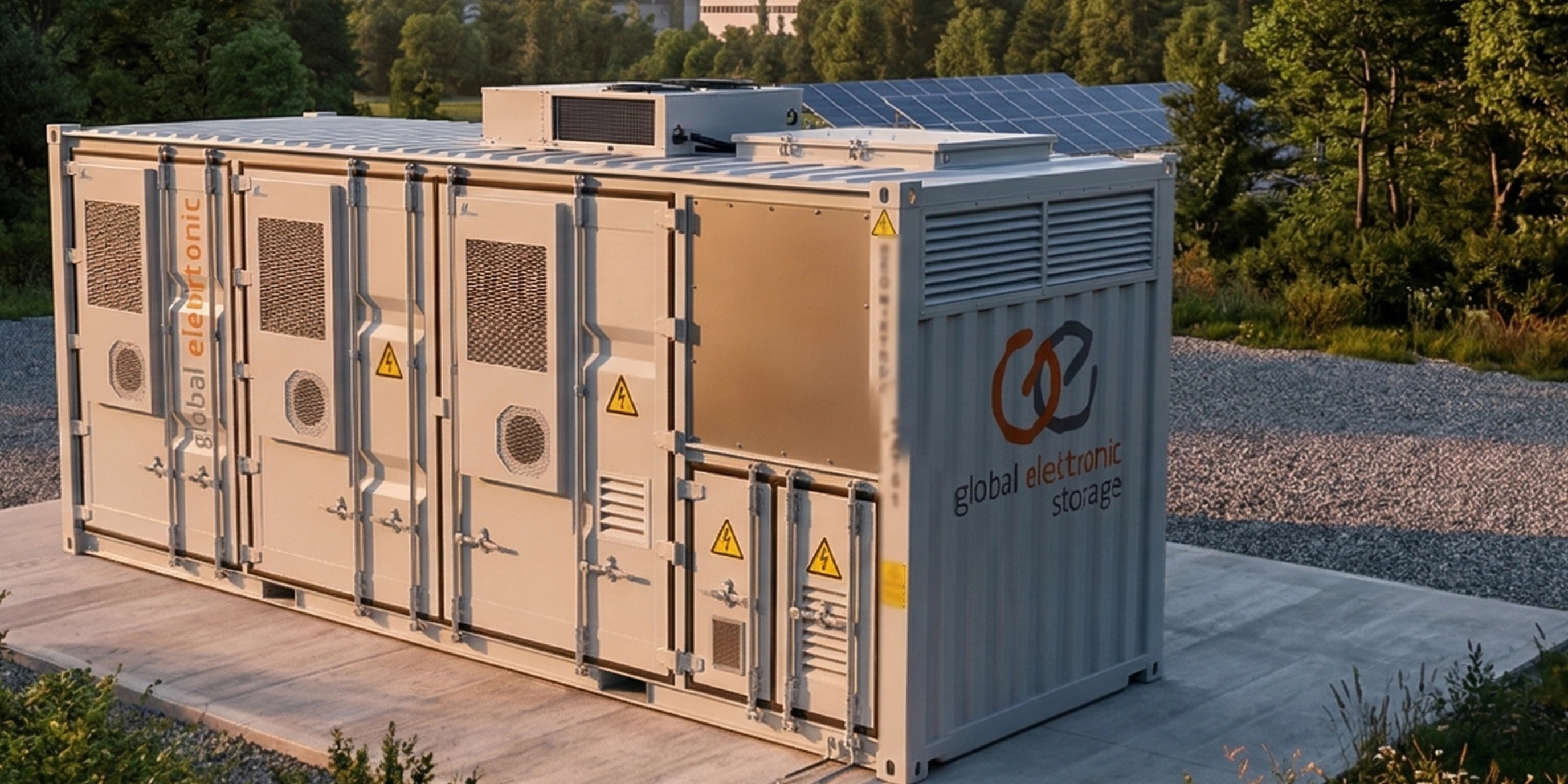
That is exactly why battery energy storage (BESS) should be treated as an operational and energy project, not as a standalone product. The real value depends on correct sizing, integration with energy management (EMS/SCADA), good measurement, a proper safety concept, connection to switchboards and, in many cases, site security around the BESS installation itself.
What BESS is and what it does for a business
BESS is a battery storage system that stores energy and releases it back into operation when it makes technical or economic sense. In practice, it is most often used for:
- peak shaving and control of contracted capacity,
- stabilising variable loads,
- improving the use of energy from PV systems,
- backing up selected technologies or operational circuits,
- preparing a site for flexibility, aggregation or further electrification.
The short answer is simple: BESS makes sense where it improves operational reliability or energy economics — not where it is purchased as an expensive box with no defined role.
When BESS makes the most sense
We most often see strong value in BESS in these situations:
1. When peak demand is a recurring problem
If a site experiences short but repeated demand spikes, it is often faster and more cost-effective to manage them with BESS than to jump immediately to a connection upgrade or other costly workarounds.
2. When there is already PV on site or a PV project is being planned
Without storage, part of the generated electricity may not be used at the most valuable time. With BESS, the site can improve self-consumption, smooth the energy profile and connect storage to EMS/SCADA.
3. When selected parts of the operation need backup
The goal is not always to back up the entire site. In many cases it makes much more sense to secure only selected circuits, technologies, control systems, servers, safety systems or sensitive production areas.
4. When the site is expected to grow
New production lines, fleet charging, expanded cooling, digitisation or broader electrification all increase pressure on available capacity and operational stability. BESS can help businesses prepare for growth without rushed infrastructure decisions.
When BESS does not make sense
It is tempting to say that battery storage is the answer for everyone. In reality, it is not.
BESS may not make sense when:
- the site has no meaningful peaks and no real backup requirement,
- the PV production profile does not create a useful storage case,
- the investor wants “some battery system” without load data,
- the project does not include measurement, control or a clear operating strategy,
- there is no suitable space, safety concept or meaningful integration with the rest of the electrical system.
That is why a good project starts with analysis, not with ordering a battery cabinet.
What determines whether BESS will still work well in a few years
Success is not defined by capacity alone. In practice, the design of the whole system matters more.
A good BESS project should address:
- sizing based on the real load profile,
- the relationship to PV, measurement and operating logic,
- EMS/SCADA and data evaluation,
- electrical integration, protection, switchboards and connections,
- operating modes such as peak shaving, backup, stabilisation and flexibility,
- documentation, inspections, commissioning and service.
BESS is exactly the kind of project where the difference between “delivering equipment” and “delivering a working solution” becomes very visible.
Why site security should be part of a BESS project
This is a point that many competitors mention only briefly, even though it often separates an average project from a truly professional one.
A BESS installation is:
- a valuable technology asset,
- often placed in a container, energy room or outdoor section of the site,
- a digitally controlled system with remote communication,
- and a technology where both operational and fire safety matter.
That is why it makes sense to design BESS together with site security, for example in connection with:
- CCTV systems,
- intruder alarm systems,
- access control systems,
- fire detection / EPS,
- network infrastructure and wireless networks where reliable monitoring and communication are required.
What is worth addressing in practice
For a BESS area or technology zone, it usually makes sense to address:
- who can access the technology and when,
- visual monitoring of the container, room or fenced zone,
- alarm events linked to unauthorised entry or tampering,
- interaction between safety scenarios, service mode and fire strategy,
- remote visibility into both the energy technology and the security layer.
In other words: BESS should not only be designed correctly from an energy perspective, but also protected physically and operationally.
Why BESS without EMS is often only half a solution
A large part of the value of BESS appears only when the control logic is configured correctly. That is why storage should be linked to EMS/SCADA, metering and operating data.
Only then can the system properly decide:
- when to charge and discharge,
- how to protect the site from demand peaks,
- how to work with PV,
- how to prioritise selected circuits,
- how to evaluate performance, cycling and project value.
Without measurement and control, BESS can quickly become an expensive technology that sounds impressive but does not deliver clear operational value.
What a partner should really mean by “we can handle everything”
It is easy to say “we provide everything.” What matters is what that actually means in practice.
In our case, that means combining multiple layers into one working whole:
- study and solution design,
- sizing and operating scenarios,
- supply of the technology itself,
- electrical integration and related works,
- EMS/SCADA,
- connection with PV systems,
- possible integration with aggregation / flexibility,
- security layers through CCTV, intruder alarm, fire detection and access control,
- inspections, service and long-term support through service.
That is the difference between a supplier who simply “delivers a battery” and a partner who delivers a complete energy and security solution.
How a BESS project typically works
1. Initial analysis
We evaluate the load profile, operating requirements, investor goals, relation to PV, priority circuits and space options.
2. Technical and safety concept
This covers sizing, power, location, electrical integration, control logic, metering, documentation and, where needed, site security.
3. Integration and implementation
Technology delivery, switchboard integration, communication setup, EMS/SCADA, security systems and monitoring.
4. Commissioning and handover
Commissioning, testing, control logic verification, inspections, documentation and operator training.
5. Service and long-term operation
Monitoring, service support, evaluation of project performance and possible future expansion.
FAQ: What businesses ask most often about BESS
Is BESS only for sites with PV?
No. PV is a common use case, but BESS can also make sense for peak shaving, load stabilisation or backup of selected circuits.
Is BESS suitable for municipalities and public buildings?
Yes, as long as there is a clear operational reason: reducing peaks, backing up important technologies, improving PV self-consumption or preparing for further electrification.
Should safety and fire scenarios be solved already in the design stage?
Yes. In a BESS project, the safety concept should not be postponed until the end.
Why connect CCTV, intruder alarm or access control to BESS?
Because BESS is a valuable and sensitive technology. Physical protection, controlled access and visual monitoring make particular sense for outdoor, standalone or remote installations.
Can you supply only the battery, or the complete solution?
The greatest value comes from delivering the complete solution: design, integration, control, security layers and service.
BESS that makes sense in real operation
BESS is not the universal answer to every energy question. But when it is designed correctly, it can significantly improve peak demand management, operational stability, backup capability, PV utilisation and the future readiness of a site.
And especially in larger or more sensitive projects, it pays to think not only about the battery itself, but also about:
- EMS/SCADA,
- aggregation / flexibility,
- service,
- and site security through CCTV, intruder alarm systems, access control and fire detection / EPS.
Are you planning BESS for a business, municipality or technical facility? Explore our battery energy storage (BESS), energy management (EMS/SCADA), aggregation / flexibility or contact us via contact. We can design the whole solution from feasibility to service — including the safety concept and site security.
Solution consultation
Do you need a similar solution?
Get in touch. We will suggest the right technical solution based on your site, operation and project requirements.
Related service
This article connects directly to Our services
If you are dealing with a similar project in practice, continue to the service detail or send us the basic project information.
Continue reading
Related articles
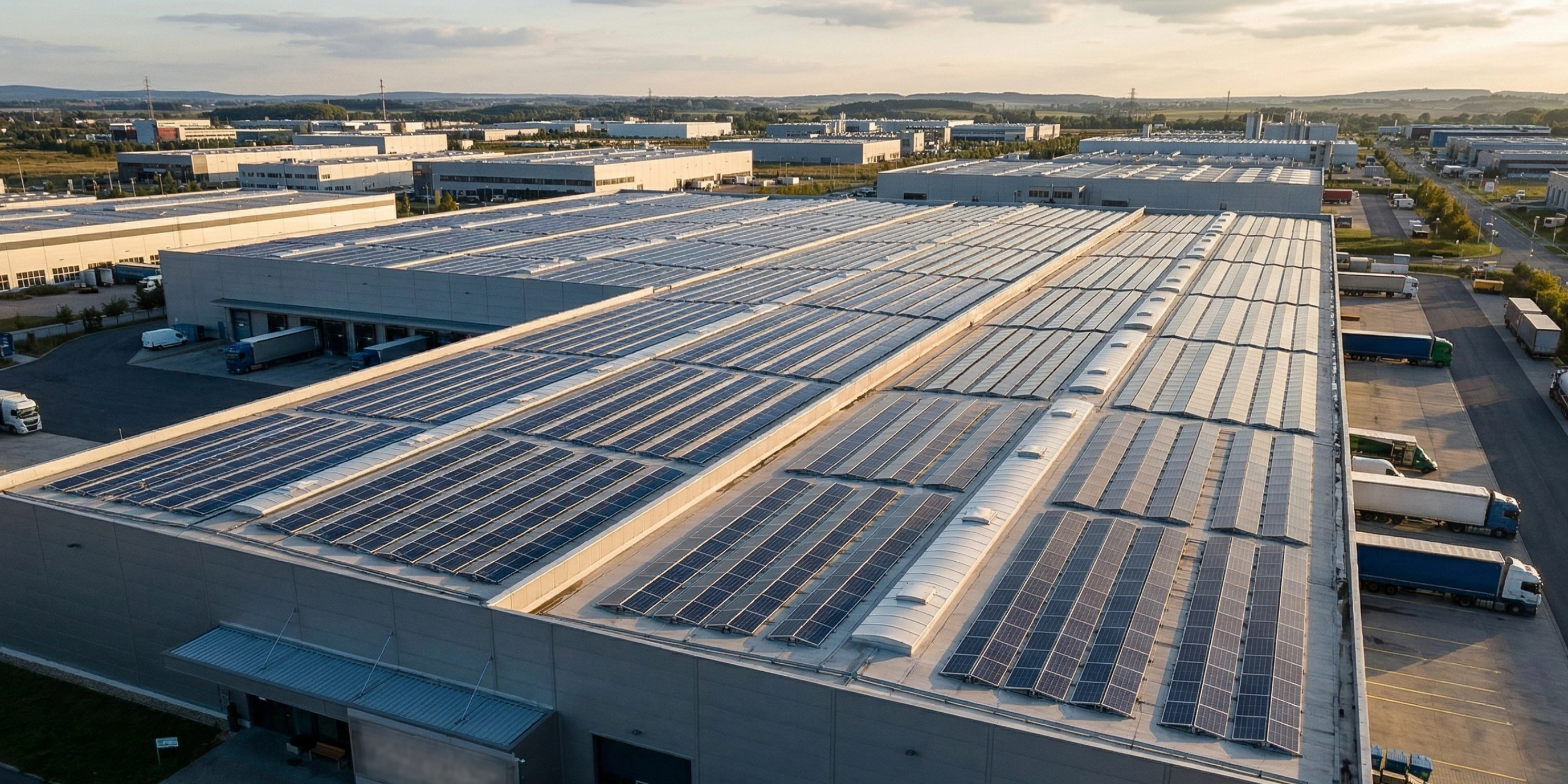
Commercial Rooftop PV: Why South Is Not Always Best
South-facing panels do not always mean the best result. In commercial rooftop PV, east-west may work better for self-consumption, EMS and BESS.

We Have Launched the New Global Elektronic Website
The new Global Elektronic website offers a clearer overview of our services for businesses, municipalities, and households across the Czech Republic.
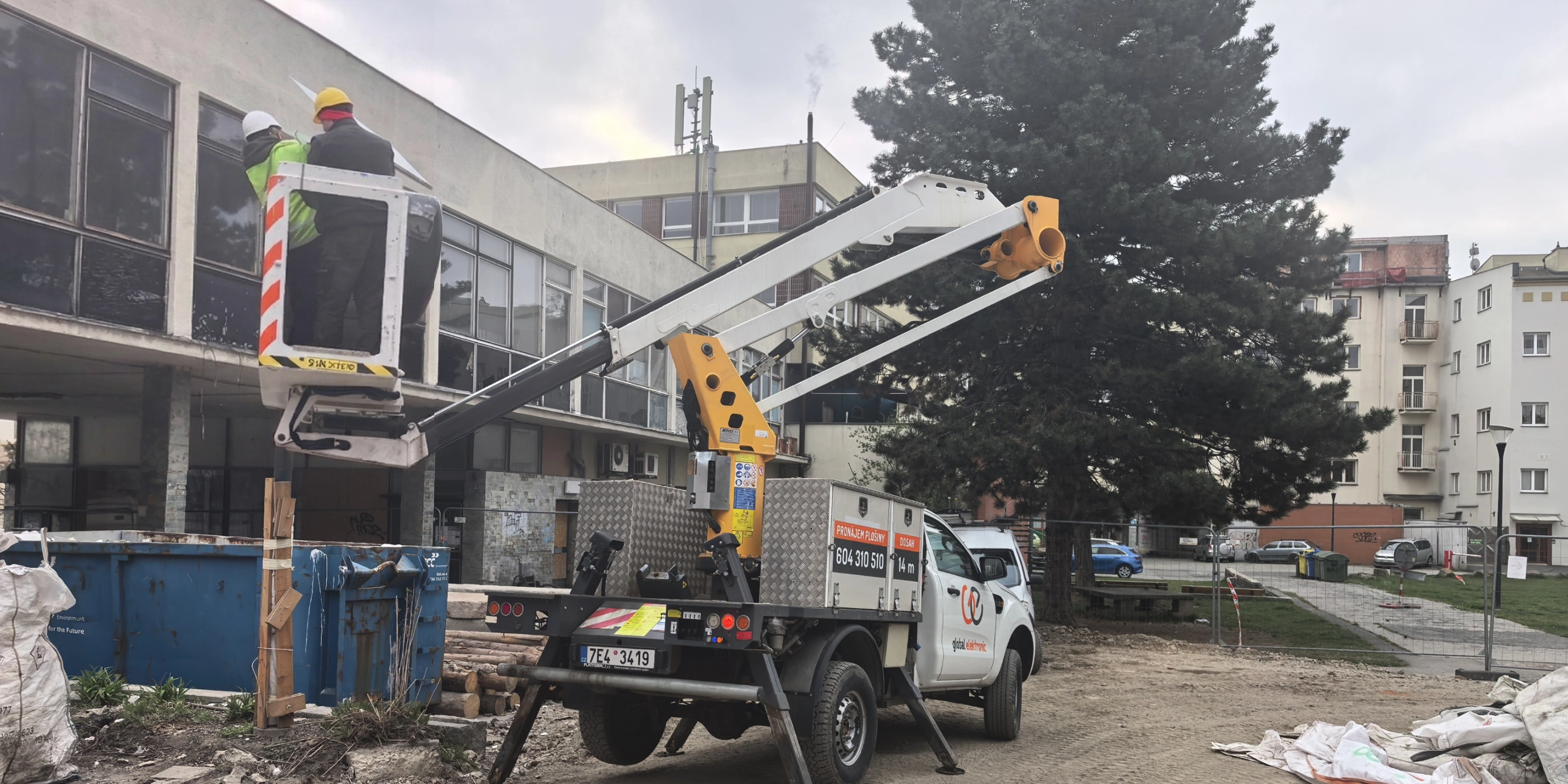
Mobile Solar Monitoring at Slezanka Demolition in Opava
For the demolition of the Slezanka shopping centre in Opava, we deployed a mobile CCTV system powered by a solar panel and battery storage.
